AISEE - 2027 Online Scholarship Application Available

List of Top Pharmacy Colleges in India 2026: NIRF Ranks & Fees
Top 20 pharmacy colleges in India by NIRF 2025 rank, with courses (D.Pharm, B.Pharm, Pharm.D, M.Pharm), PCI approval, admission exams like GPAT and NIPER JEE, fees and careers.
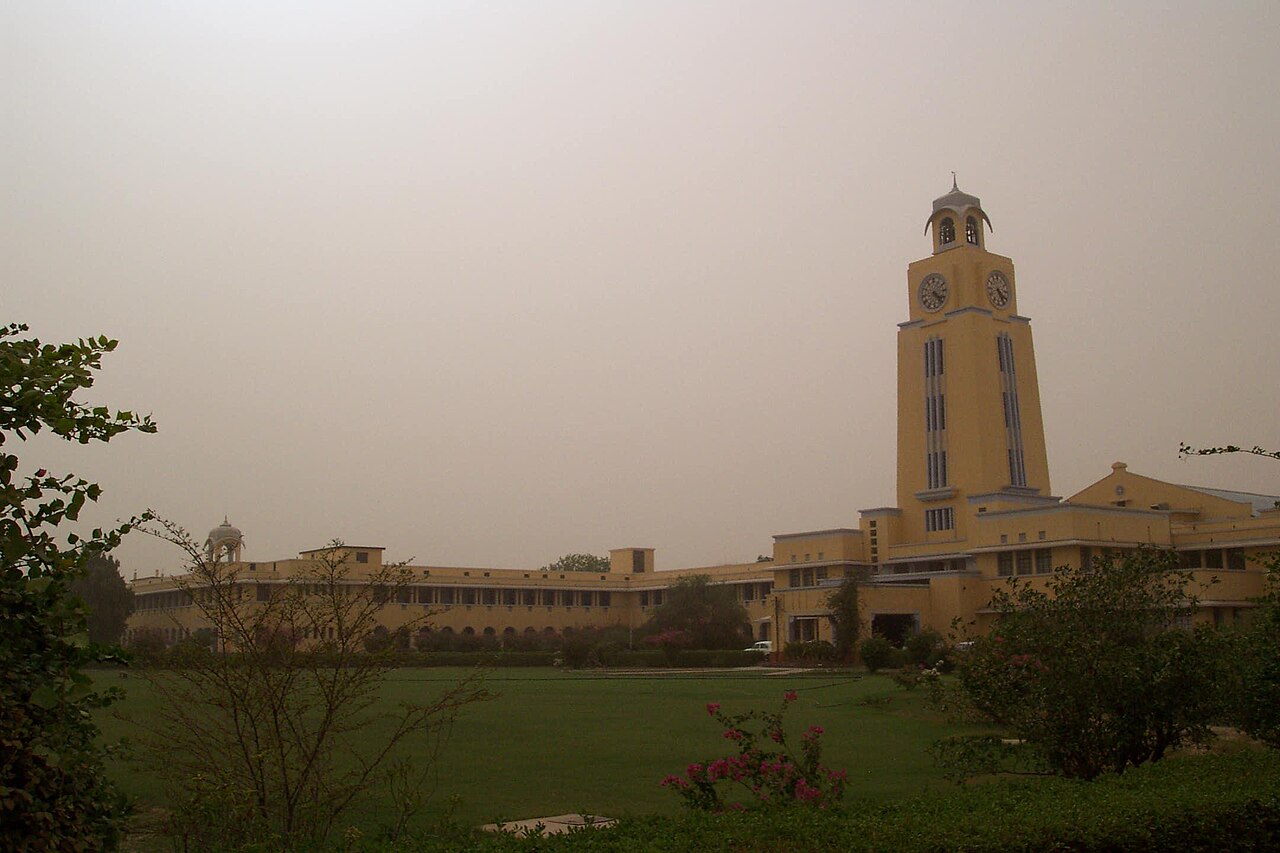
Looking for the top pharmacy colleges in India for 2026? The most reliable starting point is the government's NIRF ranking. In the latest edition, NIRF 2025 – Pharmacy category, Jamia Hamdard (New Delhi) is ranked No. 1, followed by BITS Pilani and Panjab University's pharmacy institute (UIPS), Chandigarh.
This guide lists the top 20 pharmacy colleges by NIRF 2025 rank, explains the main courses (D.Pharm, B.Pharm, Pharm.D and M.Pharm), and shows how admission works through state CETs, BITSAT, CUET, GPAT and NIPER JEE. You will also find approximate fees, career options, scholarships and answers to common questions.
Quick answer: As per NIRF 2025 (Pharmacy), the top 5 pharmacy colleges in India are Jamia Hamdard, New Delhi (1), BITS Pilani (2), Panjab University, Chandigarh (3), JSS College of Pharmacy, Ooty (4) and NIPER Hyderabad (5). NIRF 2025 is the latest edition released (4 September 2025); the 2026 list had not been officially published at the time of writing.
Note: Several websites already show a "NIRF 2026 pharmacy ranking" with a different order. We could not confirm any 2026 pharmacy list from an official source, so this article uses the official NIRF 2025 ranks. Always check the latest list on nirfindia.org.
Top 20 pharmacy colleges in India at a glance (NIRF 2025)
The table below shows the 20 highest-ranked institutions in the NIRF 2025 Pharmacy ranking, with their NIRF score out of 100. NIRF scores colleges on teaching and resources, research, graduation outcomes, outreach and inclusivity, and perception.
| NIRF 2025 rank | Institute | City, State | Type | NIRF score |
|---|---|---|---|---|
| 1 | Jamia Hamdard (School of Pharmaceutical Education and Research) | New Delhi, Delhi | Deemed university | 86.59 |
| 2 | Birla Institute of Technology and Science (BITS) Pilani | Pilani, Rajasthan | Deemed university (private) | 82.28 |
| 3 | Panjab University (UIPS) | Chandigarh | Public state university | 76.39 |
| 4 | JSS College of Pharmacy, Ooty | Ooty, Tamil Nadu | Constituent college, JSS AHER (deemed) | 76.14 |
| 5 | NIPER Hyderabad | Hyderabad, Telangana | Institute of National Importance | 75.64 |
| 6 | Institute of Chemical Technology (ICT) | Mumbai, Maharashtra | Deemed university (state-funded) | 74.77 |
| 7 | JSS College of Pharmacy, Mysuru | Mysuru, Karnataka | Constituent college, JSS AHER (deemed) | 73.38 |
| 8 | Manipal College of Pharmaceutical Sciences | Manipal (Udupi), Karnataka | Constituent college, MAHE (deemed) | 73.25 |
| 9 | NIPER Mohali | Mohali, Punjab | Institute of National Importance | 70.96 |
| 10 | SRM Institute of Science and Technology | Chennai, Tamil Nadu | Deemed university (private) | 70.84 |
| 11 | SVKM's NMIMS | Mumbai, Maharashtra | Deemed university (private) | 70.59 |
| 12 | NIPER Guwahati | Guwahati, Assam | Institute of National Importance | 69.64 |
| 13 | Lovely Professional University | Phagwara, Punjab | Private university | 68.59 |
| 14 | Amrita Vishwa Vidyapeetham | Coimbatore, Tamil Nadu | Deemed university (private) | 68.39 |
| 15 | Chandigarh University | Mohali, Punjab | Private university | 68.34 |
| 16 | Chitkara University | Rajpura, Punjab | Private university | 66.85 |
| 17 | NIPER Raebareli | Lucknow, Uttar Pradesh | Institute of National Importance | 66.65 |
| 18 | Amity University | Noida, Uttar Pradesh | Private university | 66.27 |
| 19 | Delhi Pharmaceutical Sciences and Research University (DPSRU) | New Delhi, Delhi | State government university | 66.24 |
| 20 | Central University of Punjab | Bathinda, Punjab | Central university | 64.73 |
Just outside the top 20, NIPER Ahmedabad (Gandhinagar) is ranked 21 in NIRF 2025, followed by Banasthali Vidyapith (22), BBAU Lucknow (23) and Jadavpur University (24).
Profiles of the top 10 pharmacy colleges
Here is a short look at each of the top 10 institutes. Fees are approximate and change every year, so treat them as a guide only.
1. Jamia Hamdard, New Delhi
Jamia Hamdard's School of Pharmaceutical Education and Research (SPER) has held the No. 1 spot in the NIRF pharmacy ranking for two years in a row. It is known for strong research output, a large faculty and close links with the Hamdard group's work in medicines.
- Type: Deemed to be university, New Delhi
- NIRF 2025: Pharmacy rank 1 (score 86.59)
- Popular courses: D.Pharm, B.Pharm, Pharm.D, M.Pharm, PhD
- Admission via: University's own admission process (entrance/merit as notified each year); M.Pharm follows PCI norms with GPAT considered
- Approx. fees: Moderate compared with private universities; check the official fee notice on jamiahamdard.ac.in
2. BITS Pilani, Rajasthan
BITS Pilani moved up to second place in NIRF 2025, pushing NIPER Hyderabad down to fifth. Its pharmacy department offers B.Pharm (Hons.) at the Pilani and Hyderabad campuses, along with M.Pharm and PhD. The flexible BITS system lets students take dual degrees and electives across disciplines.
- Type: Deemed to be university (private)
- NIRF 2025: Pharmacy rank 2 (score 82.28)
- Popular courses: B.Pharm (Hons.), M.Pharm, PhD
- Admission via: BITSAT for B.Pharm; GPAT/institute process for M.Pharm
- Approx. fees: Semester fee of about ₹2.9 lakh for first-degree programmes in 2026-27 (about ₹5.8 lakh a year plus hostel), as per the official fee schedule on bits-pilani.ac.in
3. Panjab University (UIPS), Chandigarh
The University Institute of Pharmaceutical Sciences (UIPS) is one of the oldest university pharmacy departments in the country. It jumped four places to rank 3 in NIRF 2025, and it is one of the best-value options because of its public-university fees.
- Type: Public state university
- NIRF 2025: Pharmacy rank 3 (score 76.39)
- Popular courses: B.Pharm, M.Pharm, PhD
- Admission via: PU CET (UG) for B.Pharm; GPAT/entrance for M.Pharm
- Approx. fees: Around ₹70,000–80,000 a year for B.Pharm (approx., 2025-26); check puchd.ac.in
4. JSS College of Pharmacy, Ooty
Part of JSS Academy of Higher Education and Research, the Ooty college kept its fourth place. It is well known for Pharm.D and clinical pharmacy training and for its hill-station campus in the Nilgiris.
- Type: Constituent college of a deemed university (private)
- NIRF 2025: Pharmacy rank 4 (score 76.14)
- Popular courses: B.Pharm, Pharm.D, M.Pharm, PhD
- Admission via: JSS AHER admission process (merit-based for UG)
- Approx. fees: Private-university range; check the JSS AHER website
5. NIPER Hyderabad, Telangana
The National Institute of Pharmaceutical Education and Research (NIPER) Hyderabad is one of seven NIPERs set up under the Department of Pharmaceuticals. NIPERs focus on postgraduate study and research, so they do not offer B.Pharm.
- Type: Institute of National Importance (Central Government)
- NIRF 2025: Pharmacy rank 5 (score 75.64)
- Popular courses: M.S. (Pharm), M.Pharm, MBA (Pharm), PhD
- Admission via: NIPER JEE
- Approx. fees: Low government fees; GPAT/NIPER students may receive a monthly stipend as per rules
6. Institute of Chemical Technology (ICT), Mumbai
ICT Mumbai is famous for chemical engineering, but its Department of Pharmaceutical Sciences and Technology is equally respected. It has strong industry links with Mumbai's pharma companies.
- Type: Deemed university (Maharashtra Government funded)
- NIRF 2025: Pharmacy rank 6 (score 74.77)
- Popular courses: B.Pharm, M.Pharm, PhD
- Admission via: MHT CET and DTE Maharashtra CAP rounds for B.Pharm
- Approx. fees: Government-aided range; check the DTE/ICT fee notice
7. JSS College of Pharmacy, Mysuru
The Mysuru campus is the sister college of JSS Ooty and has a long record in pharmacy education in Karnataka. It slipped one place to seventh in 2025.
- Type: Constituent college of JSS AHER (deemed)
- NIRF 2025: Pharmacy rank 7 (score 73.38)
- Popular courses: B.Pharm, Pharm.D, M.Pharm, PhD
- Admission via: JSS AHER admission process
- Approx. fees: Private-university range
8. Manipal College of Pharmaceutical Sciences (MCOPS)
MCOPS is part of Manipal Academy of Higher Education and kept its eighth rank. Students benefit from Manipal's large hospital network for clinical exposure.
- Type: Constituent college of MAHE (deemed, private)
- NIRF 2025: Pharmacy rank 8 (score 73.25)
- Popular courses: B.Pharm, Pharm.D, M.Pharm, PhD
- Admission via: MAHE's own admission process (MET/merit, as notified)
- Approx. fees: Private-university range; check the MAHE website
9. NIPER Mohali, Punjab
NIPER Mohali is the first and largest of the NIPERs. It is a leading centre for drug discovery, pharmaceutics and regulatory science research.
- Type: Institute of National Importance
- NIRF 2025: Pharmacy rank 9 (score 70.96)
- Popular courses: M.S. (Pharm), M.Pharm, MBA (Pharm), PhD
- Admission via: NIPER JEE
- Approx. fees: Low government fees
10. SRM Institute of Science and Technology, Chennai
SRM IST is a new entry in the top 10 this year. Its College of Pharmacy at Kattankulathur offers a wide range of programmes and large-campus facilities.
- Type: Deemed university (private)
- NIRF 2025: Pharmacy rank 10 (score 70.84)
- Popular courses: B.Pharm, Pharm.D, M.Pharm, PhD
- Admission via: SRM's own admission process
- Approx. fees: Private-university range
Ranks 11 to 20 in brief
The next ten include two more NIPERs (Guwahati at 12 and Raebareli at 17) and several fast-growing private universities. NMIMS Mumbai (11) is strong in pharma management. DPSRU (19) is a Delhi Government university with low fees. Central University of Punjab (20) is a good choice for M.Pharm and research. Private universities such as LPU (13), Chandigarh University (15), Chitkara (16) and Amity Noida (18) offer large intakes but usually higher fees.
Pharmacy courses in India: D.Pharm, B.Pharm, Pharm.D and M.Pharm
Every pharmacy course that leads to registration as a pharmacist must be approved by the Pharmacy Council of India (PCI), the statutory body under the Pharmacy Act, 1948. Before you pay any fee, check that your college and course appear on PCI's approved list for the current year.
| Course | Duration | Eligibility (general) | Best for |
|---|---|---|---|
| D.Pharm | 2 years + practical training | Class 12 with Physics, Chemistry and Biology or Maths | Quick entry to work as a registered pharmacist (retail/hospital) |
| B.Pharm | 4 years (lateral entry to 2nd year after D.Pharm) | Class 12 with Physics, Chemistry and Biology or Maths | Industry, research, regulatory and higher study |
| Pharm.D | 6 years (5 years study + 1 year internship) | Class 12 with PCB/PCM | Clinical and hospital pharmacy, patient care |
| M.Pharm | 2 years | B.Pharm from a PCI-approved college | Specialisation (pharmaceutics, pharmacology, QA, etc.), R&D |
Note on the D.Pharm exit exam: PCI notified a Diploma in Pharmacy Exit Examination in 2022, but the exam has been deferred repeatedly. In early 2026 PCI asked State Pharmacy Councils to issue registration to eligible D.Pharm pass-outs. Check pci.nic.in for the latest position.
Planning B.Tech, MBBS or another degree after Class 12? Take the AISEE scholarship exam and you could win up to 100% tuition fee scholarship at AISEE participating colleges across India.
How admission to top pharmacy colleges works
There is no single national entrance exam for B.Pharm. Each state and many universities run their own process. Here is the typical path:
- Pass Class 12 with PCB or PCM. Most colleges want English as a subject and a minimum aggregate (often 45–50% for general category).
- Write the right entrance test. Common ones are MHT CET (Maharashtra), KCET (Karnataka), AP/TS EAPCET, WBJEE, PU CET (UG) for Panjab University, BITSAT for BITS Pilani, and CUET UG for several central and state universities. Some private universities use their own tests or Class 12 merit.
- Register for counselling. States run centralised rounds (for example DTE Maharashtra CAP). Deemed and private universities hold their own counselling.
- For M.Pharm, take GPAT. The Graduate Pharmacy Aptitude Test is conducted by NBEMS. GPAT 2026 was held on 7 March 2026 and results came out on 7 April 2026. A valid GPAT score is needed for the PG scholarship/stipend, and many colleges use it for admission.
- For NIPERs, take NIPER JEE. This joint entrance exam covers M.S. (Pharm), M.Pharm, MBA (Pharm) and PhD seats at all seven NIPERs. The 2026 exam was held in June 2026.
Verify before you apply: Entrance exams, seat shares and fees change every year. Read the official information brochure of the college and the state counselling authority before filling any form.
Fees and career scope after pharmacy
Fees vary widely with the type of institute. As a rough guide (approx., 2025-26):
- Government/public colleges: about ₹10,000 to ₹1 lakh per year for B.Pharm.
- Private and deemed universities: about ₹1 lakh to ₹3 lakh per year; premium institutes such as BITS Pilani cost more.
- NIPERs (PG): low tuition with possible stipends for eligible students.
Pharmacy graduates work across the healthcare and medicines industry. Popular roles include:
- Registered pharmacist in hospitals, clinics and retail chains
- Quality control and quality assurance in drug manufacturing
- Research and development, formulation and analytical labs
- Clinical research, pharmacovigilance and medical writing
- Regulatory affairs and drug inspector posts (through state/central recruitment)
- Pharma marketing, sales and business roles (often after an MBA in pharma management)
Starting salaries for B.Pharm graduates are typically modest (often about ₹2.5–5 lakh a year, approx.). M.Pharm, M.S. (Pharm) and NIPER graduates usually get better R&D and corporate offers.
How to choose the right pharmacy college
A high NIRF rank is a good signal, but it is not the only thing that matters. Use these checks:
- PCI approval: Confirm the course and intake are approved by PCI for the year you join.
- Course offered: NIPERs are PG-only. If you want B.Pharm or Pharm.D, pick a college that offers it.
- Hospital tie-ups: For Pharm.D or clinical careers, choose a college with an attached hospital.
- Research and labs: Look at publications, funded projects and instrument facilities if you plan R&D work.
- Total cost: Add tuition, hostel and exam fees for all years, not just year one.
- Placements: Ask for the latest placement report and the median package, not just the highest.
Tip: If budget matters, public options such as Panjab University (UIPS), ICT Mumbai, DPSRU and state government pharmacy colleges give strong value. Also, apply to more than one state CET to widen your choices.
Scholarships for pharmacy students
Pharmacy education can be expensive, especially in private universities. The good news is that several schemes can reduce the cost:
- National Scholarship Portal (NSP): Central schemes such as post-matric scholarships for SC/ST/OBC/minority students and the Central Sector Scheme for college students.
- State scholarships: Most states offer fee reimbursement or merit scholarships for professional courses, including B.Pharm.
- GPAT-linked PG scholarship: M.Pharm students with a valid GPAT score at approved institutes can get a monthly scholarship as per AICTE/PCI rules.
- Private and merit scholarships: Many universities give fee waivers for high entrance scores. National-level exams like the AISEE scholarship also help students fund college education.
See our guides to scholarships for medical and health-science students and scholarships after 12th in India for more options.
Frequently asked questions
Which is the No. 1 pharmacy college in India?
Jamia Hamdard, New Delhi, is ranked No. 1 in the NIRF 2025 Pharmacy ranking with a score of 86.59. It has held the top position for two consecutive years.
Is NEET required for B.Pharm admission?
No, NEET is generally not required for B.Pharm. Admission is usually through state CETs (such as MHT CET or KCET), BITSAT, CUET UG, university entrance tests or Class 12 merit, depending on the college.
Can I do B.Pharm after Class 12 with PCM?
Yes. PCI rules allow Class 12 with Physics and Chemistry plus either Biology or Mathematics. Some state CETs, such as MHT CET, accept both PCB and PCM groups for B.Pharm.
Is GPAT compulsory for M.Pharm?
GPAT is not compulsory at every college, but it is required for the M.Pharm scholarship/stipend and is used for admission by many universities. NIPERs use their own NIPER JEE instead.
What is the difference between B.Pharm and Pharm.D?
B.Pharm is a 4-year degree focused on drug science and the pharma industry. Pharm.D is a 6-year programme, including a one-year internship, focused on clinical and hospital pharmacy practice.
Do NIPERs offer B.Pharm?
No. NIPERs are postgraduate institutes that offer M.S. (Pharm), M.Pharm, MBA (Pharm) and PhD programmes through NIPER JEE.
Has the NIRF 2026 pharmacy ranking been released?
At the time of writing (October 2026), we could not confirm an official NIRF 2026 pharmacy list, so NIRF 2025 is the latest verified edition. Check nirfindia.org for updates.
Conclusion: choosing among the top pharmacy colleges in India
The top pharmacy colleges in India for 2026, led by Jamia Hamdard, BITS Pilani and Panjab University, combine strong teaching, research and industry links. NIPERs lead for postgraduate study, while public universities like UIPS and ICT Mumbai offer excellent value.
Your next step: shortlist 5–8 PCI-approved colleges, note which entrance exams they accept, and mark the application dates. To sharpen your preparation, try the free AISEE test series before your entrance exams.
Up to 100% tuition fee scholarship for Engineering, Medical and college students.