AISEE - 2027 Online Scholarship Application Available

List of Top Polytechnic Colleges in India 2026: Admission & Fees
A 2026 list of 16 well-known government and aided polytechnics in India, with diploma admission routes by state, fees, lateral entry to B.Tech and career options.
Looking for a list of top polytechnic colleges in India for 2026? This guide covers 16 well-known government and government-aided polytechnics across Maharashtra, Delhi, Tamil Nadu, Karnataka, Uttar Pradesh, Madhya Pradesh and Gujarat, along with how diploma admission after Class 10 works in each state, typical fees, lateral entry to B.Tech and career options.
One thing to know upfront: NIRF does not rank polytechnics. The National Institutional Ranking Framework covers universities, engineering colleges and other degree-level institutions, but not diploma institutes. So this list is based on other credible signals: government or government-aided status, age and track record, AICTE approval, autonomous status, NBA accreditation where confirmed, and reputation in state admission rounds.
Quick answer: Some of the most respected polytechnics in India are Government Polytechnic Mumbai, Government Polytechnic Pune, Government Polytechnic Nagpur, VJTI's diploma wing, PSG Polytechnic College (Coimbatore), Thiagarajar Polytechnic College (Salem), SJ Polytechnic (Bengaluru) and the DSEU polytechnic campuses in Delhi. Admission after Class 10 is either merit-based (Maharashtra, Tamil Nadu, Karnataka, Gujarat) or through an entrance test (Delhi CET, UP JEECUP, Bihar DCECE, AP/TS POLYCET).
Top 16 polytechnic colleges in India at a glance
The table is grouped by state, not ranked in order of merit. Since there is no official national ranking for diplomas, treat the order as a starting list for your research.
| # | Polytechnic | City, State | Type | Established | Admission route |
|---|---|---|---|---|---|
| 1 | Government Polytechnic Mumbai | Mumbai, Maharashtra | Government, autonomous | 1960 | DTE Maharashtra CAP (10th merit) |
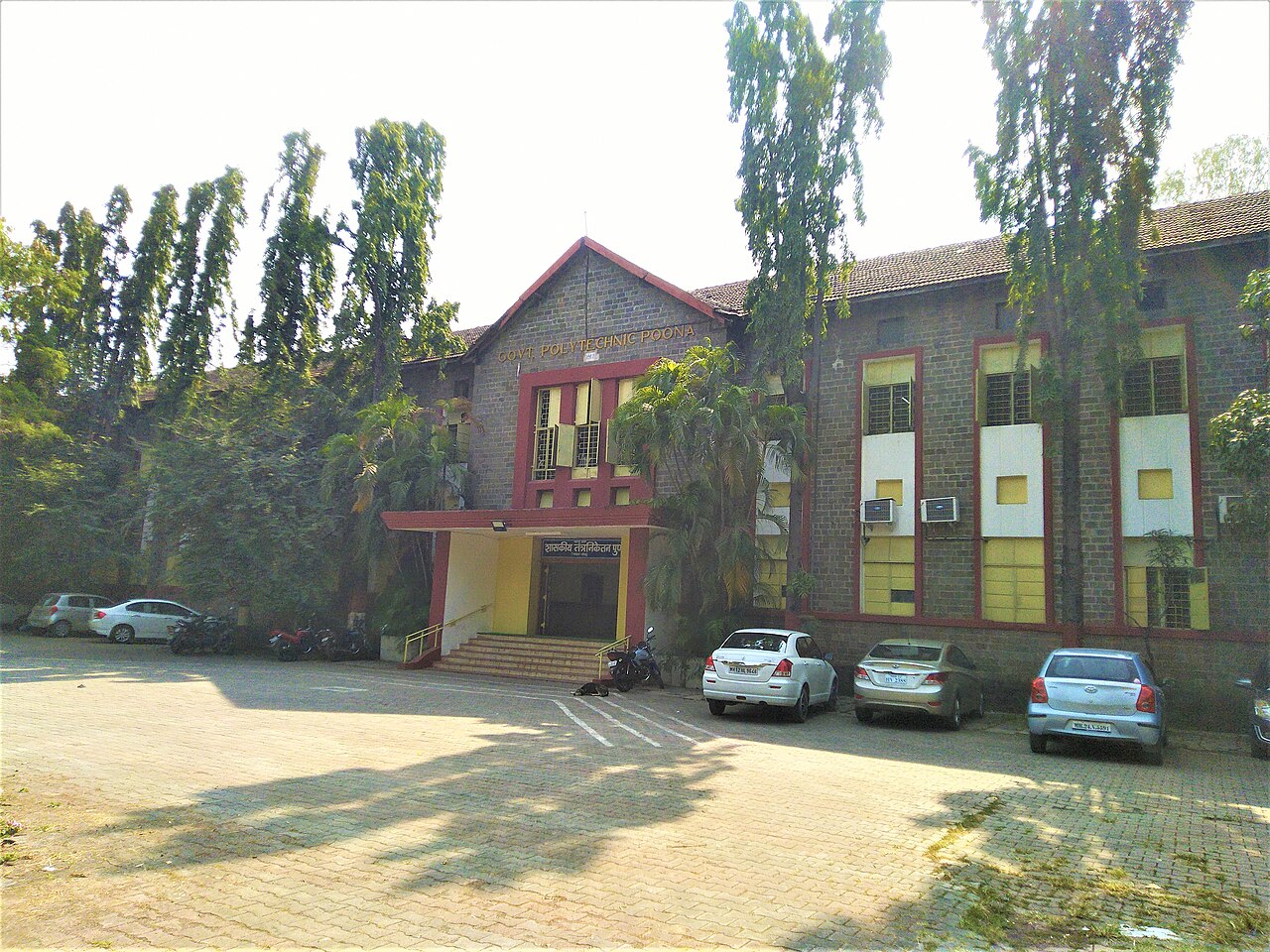
| 2 | Government Polytechnic Pune | Pune, Maharashtra | Government, autonomous | 1957 | DTE Maharashtra CAP (10th merit) |
| 3 | Government Polytechnic Nagpur | Nagpur, Maharashtra | Government, autonomous | 1914 | DTE Maharashtra CAP (10th merit) |
| 4 | VJTI (Diploma programmes) | Mumbai, Maharashtra | Government-aided autonomous institute | 1887 (institute) | DTE Maharashtra CAP (10th merit) |
| 5 | PSG Polytechnic College | Coimbatore, Tamil Nadu | Government-aided, autonomous | 1939 | Merit (10th marks) |
| 6 | Thiagarajar Polytechnic College | Salem, Tamil Nadu | Autonomous, AICTE-approved | 1958 | Merit (10th marks) |
| 7 | Sri Jayachamarajendra (SJ) Government Polytechnic | Bengaluru, Karnataka | Government | 1943 | DTE Karnataka (SSLC merit) |
| 8 | DSEU Pusa Campus (Pusa Institute of Technology) | New Delhi | Government (DSEU) | 1962 | Delhi CET |
| 9 | DSEU G.B. Pant Campus, Okhla | New Delhi | Government (DSEU) | 1961 | Delhi CET |
| 10 | DSEU Aryabhatt Campus, Ashok Vihar | New Delhi | Government (DSEU) | Check website | Delhi CET |
| 11 | DSEU Meerabai Campus (women only) | New Delhi | Government (DSEU) | 1962 | Delhi CET |
| 12 | Jamia University Polytechnic (JMI) | New Delhi | Central university | Part of JMI | JMI entrance test |
| 13 | AMU University Polytechnic | Aligarh, Uttar Pradesh | Central university | Part of AMU | AMU admission test |
| 14 | Government Polytechnic Lucknow | Lucknow, Uttar Pradesh | Government | Check website | UP JEECUP |
| 15 | Kalaniketan Polytechnic College | Jabalpur, Madhya Pradesh | Government, autonomous | Roots in 1947 | MP DTE online counselling |
| 16 | Government Polytechnic Ahmedabad | Ahmedabad, Gujarat | Government | 1950s | ACPDC (10th merit) |
Note: Establishment years come from institute websites where available and from at least two other sources otherwise. Where sources disagreed, we have written "check website" rather than guess.
Worried about college fees? Thousands of students reduce their fees every year with the AISEE merit scholarship. Practise free with the AISEE test series and apply online in minutes.
Maharashtra: the state with the oldest government polytechnics
Maharashtra has one of India's largest diploma systems. All first-year diploma seats in government institutes are filled through the Directorate of Technical Education (DTE) Centralised Admission Process (CAP), based on Class 10 marks.
1. Government Polytechnic Mumbai
GP Mumbai began at the Elphinstone Technical School and moved to its campus in Bandra in 1985. It has academic autonomy, so it designs its own curriculum, while remaining under the Maharashtra State Board of Technical Education (MSBTE) framework.
- Established: 1960 (Government of Maharashtra)
- Type: Government, academically autonomous, AICTE-approved
- Popular diplomas: Civil, Mechanical, Electrical, Electronics, Computer, Information Technology
- Admission via: DTE Maharashtra CAP (merit in Class 10)
- Approx. fees: low, government rates; check the official website
2. Government Polytechnic Pune
GP Pune first ran classes from the College of Engineering Pune premises before building its own campus in the early 1960s. It received academic autonomy in 1994 and now sits on a campus of roughly 28 acres.
- Established: 1957
- Type: Government, autonomous (since 1994)
- Popular diplomas: Mechanical, Civil, Electrical, E&TC, Computer, Metallurgy
- Admission via: DTE Maharashtra CAP
- Website: gppune.ac.in
3. Government Polytechnic Nagpur
One of the oldest technical schools in central India, GP Nagpur started in 1914 as the Government Engineering School with just 16 students. Today it runs around a dozen diploma programmes for more than 2,000 students.
- Established: 1914
- Type: Government, autonomous, AICTE-approved
- Popular diplomas: Civil, Mechanical, Electrical, Automobile, Electronics
- Admission via: DTE Maharashtra CAP
4. VJTI Mumbai – Diploma programmes
Veermata Jijabai Technological Institute is best known for its degree courses, but it also runs post-SSC diplomas. For 2026-27, VJTI lists six diploma branches with 60 seats each, and there is no management quota.
- Branches: Civil, Electrical, Electronics, Mechanical, Textile Manufacturing, Chemical
- Admission via: DTE Maharashtra CAP only
- Tip: core branches fill at high 10th-percentage cut-offs; Textile and Chemical usually close lower
- Website: vjti.ac.in
Tamil Nadu and Karnataka: strong industry-linked polytechnics
5. PSG Polytechnic College, Coimbatore
PSG Polytechnic was set up in 1939 by the PSG & Sons' Charities and was one of the first polytechnics in South India. It has had autonomous status since 1976 and works closely with Coimbatore's engineering and textile industries.
- Established: 1939
- Type: Government-aided, autonomous
- Popular diplomas: Mechanical, Automobile, Electrical, Electronics, Computer, Textile Technology (around 15–16 programmes)
- Admission via: merit in Class 10 under Tamil Nadu DOTE rules
- Approx. fees: aided seats are very low cost, roughly ₹2,000 a year (2025-26, approx.); check psgpolytech.ac.in
6. Thiagarajar Polytechnic College, Salem
Note that Thiagarajar Polytechnic College is in Salem, not Madurai (Madurai has the Thiagarajar College of Engineering). The polytechnic was founded in 1958 and became autonomous in 1987-88. Several of its departments hold NBA accreditation.
- Established: 1958
- Type: Autonomous, affiliated to the State Board of Technical Education & Training, Tamil Nadu; AICTE-approved
- Popular diplomas: Civil, Mechanical, EEE, ECE, Production, Textile, Computer
- Admission via: merit (Class 10)
7. Sri Jayachamarajendra (SJ) Government Polytechnic, Bengaluru
Founded in 1943 with the support of Sir M. Visvesvaraya, SJ Polytechnic is among the oldest polytechnics in Karnataka. It now offers diplomas in about 16 programmes, and its film and sound courses later grew into the Government Film and Television Institute.
- Established: 1943
- Type: Government (Karnataka)
- Popular diplomas: Civil, Mechanical, Electrical, Electronics, Computer Science, Automobile
- Admission via: DTE Karnataka, based on SSLC merit
Delhi: DSEU campuses and university polytechnics
Most of Delhi's well-known government polytechnics now run as campuses of the Delhi Skill and Entrepreneurship University (DSEU). First-year diploma seats are filled through the Delhi Polytechnic CET, conducted under the Department of Training and Technical Education (DTTE).
8. DSEU Pusa Campus (formerly Pusa Institute of Technology)
Earlier called Pusa Polytechnic, this 1962 institute is one of Delhi's most popular choices for core engineering diplomas.
- Established: 1962
- Popular diplomas: Civil, Mechanical, Electrical, Electronics, Computer, Chemical
- Admission via: Delhi CET
9. DSEU G.B. Pant Campus, Okhla
Started in 1961 as the Govind Ballabh Pant Institute of Technology, it is known for its automobile and mechanical programmes.
- Established: 1961
- Popular diplomas: Automobile, Mechanical, Electrical, Civil
- Admission via: Delhi CET
10. DSEU Aryabhatt Campus, Ashok Vihar
Aryabhatt (formerly Aryabhatt Polytechnic) offers engineering and applied diplomas in North Delhi, including part-time options for working students.
- Popular diplomas: Electrical, Electronics, Computer, Mechanical
- Admission via: Delhi CET
11. DSEU Meerabai Campus, Maharani Bagh (women only)
It began as a Women's Polytechnic in 1962 and is now a DSEU campus for girls. It combines engineering diplomas with fields like interior design, cosmetology and medical lab technology.
- Established: 1962
- Admission via: Delhi CET
12. Jamia University Polytechnic, Jamia Millia Islamia
Jamia Millia Islamia, a central university, runs a University Polytechnic offering diplomas in Civil, Computer, Electrical, Electronics and Mechanical Engineering. Admission is through JMI's own entrance test, and both regular and self-financed seats are available.
- Type: Central university institute
- Admission via: JMI entrance test; see the prospectus on jmi.ac.in
Uttar Pradesh, Madhya Pradesh and Gujarat
13. AMU University Polytechnic, Aligarh
The University Polytechnic is part of Aligarh Muslim University, a central university. Diploma admission goes through AMU's own admission test, which tens of thousands of students take each year for Class 11 and diploma seats.
- Type: Central university institute
- Eligibility: Class 10 pass with set minimum marks in Science, Maths and English
- Admission via: AMU diploma admission test
14. Government Polytechnic Lucknow
One of UP's best-known government polytechnics, offering more than a dozen diploma courses. Seats are allotted through the JEECUP entrance exam and counselling. Do not confuse it with Lucknow Polytechnic, a separate government-aided institute.
- Type: Government (Uttar Pradesh)
- Admission via: UP JEECUP
15. Kalaniketan Polytechnic College, Jabalpur
Kalaniketan traces its roots to an institution set up in 1947. It merged with the government polytechnic in Jabalpur in 1993 and later received autonomy from the Madhya Pradesh government.
- Type: Government, autonomous
- Admission via: MP DTE online counselling
16. Government Polytechnic Ahmedabad
One of Gujarat's earliest state polytechnics, set up in the 1950s in the Ambawadi area of Ahmedabad. It offers a wide spread of engineering diplomas at government fees. Government Polytechnic Gandhinagar is another popular option nearby.
- Type: Government (Gujarat), AICTE-approved
- Admission via: ACPDC merit list based on Class 10 marks
How polytechnic admission works in 2026
Most diploma courses last three years (six semesters), and the basic eligibility is a Class 10 pass with about 35% marks, with Science and Maths. Each state runs its own process:
| State | Process | Basis |
|---|---|---|
| Delhi | Delhi Polytechnic CET (DTTE) | Entrance test |
| Uttar Pradesh | JEECUP | Entrance test (computer-based in 2026) |
| Bihar | DCECE (BCECEB) | Entrance test |
| Andhra Pradesh / Telangana | AP POLYCET / TS POLYCET | Entrance test |
| Maharashtra | DTE CAP | Class 10 merit |
| Tamil Nadu | DOTE (tnpoly.in) | Class 10 merit |
| Karnataka | DTE Karnataka | SSLC merit |
| Gujarat | ACPDC | Class 10 merit |
For 2026, JEECUP was held from 2 to 9 June, AP POLYCET on 25 April, TS POLYCET on 13 May and Bihar DCECE on 23–24 May. Expect a similar window (April–June) in 2027, but always confirm on the official portal.
- Pick your state and branch early, ideally while in Class 10.
- Register online on the state portal (or the university portal for AMU and Jamia) when forms open, usually March–May.
- Take the entrance test if your state has one; otherwise just upload your Class 10 marks.
- Check the merit list and fill choices of colleges and branches.
- Accept your allotted seat, verify documents and pay fees before the deadline.
Verify dates and fees: Schedules and fees change every year. Use only official portals such as jeecup.admissions.nic.in, tte.delhi.gov.in, bceceboard.bihar.gov.in and dtemaharashtra.gov.in.
Fees at top polytechnic colleges
Government and aided polytechnics are among the cheapest routes into engineering in India. Approximate annual fees (2025-26):
- Government-aided (e.g. PSG Polytechnic aided seats): about ₹2,000–₹5,000 a year
- State government polytechnics: usually ₹5,000–₹25,000 a year
- Self-financed / private polytechnics: ₹40,000 to over ₹1,00,000 a year
Hostel and mess charges are extra. Many states also waive or reimburse tuition for SC/ST, OBC, EWS and low-income students.
Lateral entry: from diploma to B.Tech second year
A big advantage of a polytechnic diploma is lateral entry. Diploma holders can join the second year of a B.E./B.Tech, saving one year compared with the Class 12 route.
- AICTE allows lateral-entry admission of up to 10% of the approved intake, over and above the regular seats, plus any vacant first-year seats.
- Usual eligibility is around 45% in the diploma (40% for reserved categories); state rules can differ.
- States hold their own lateral-entry exams or merit rounds, for example Karnataka's DCET and Maharashtra's Direct Second Year (DSY) admission.
Some diploma holders also go straight into jobs and study for a degree later through part-time or work-integrated programmes.
Careers after a polytechnic diploma
A diploma prepares you for hands-on technical roles. Common job titles include junior engineer, site supervisor, maintenance technician, CAD draughtsman, quality inspector and lab assistant.
- Public sector: state electricity boards, PWD, railways (RRB JE), SSC JE and PSU technician posts
- Private sector: manufacturing, automobile, construction, electronics and IT support companies
- Self-employment: electrical contracting, repair services, small workshops
Starting salaries for diploma holders are modest, often in the range of ₹1.5–3.5 lakh a year (approx.), but they rise with experience or after a lateral-entry B.Tech.
How to choose the right polytechnic
Tip: A government polytechnic in a branch you like is usually a better choice than a private one in a branch you picked only for the name.
- Check AICTE approval for the exact course and year on the AICTE portal.
- Prefer government, aided or autonomous institutes for low fees and better labs.
- Look at last year's cut-offs on the state portal to set realistic choices.
- Ask about industry training and placements; a mandatory internship is a good sign.
- Consider distance and hostel availability, especially for 15–16-year-old students.
Scholarships and funding for diploma students
Polytechnic students can apply for several kinds of financial help:
- National Scholarship Portal (NSP): central schemes, including pre-matric and post-matric scholarships for eligible categories.
- AICTE schemes: such as the Pragati scholarship for girl students and Saksham for differently-abled students, including at diploma level.
- State schemes: for example Maharashtra's MahaDBT, Tamil Nadu's fee concessions and UP's scholarship portal.
If you plan to move on to a B.Tech after your diploma, you can also look at merit-based options such as the AISEE scholarship for engineering students. For a wider view, see our guide to scholarships in India and the important scholarship exam dates.
Frequently asked questions
Does NIRF rank polytechnic colleges?
No. NIRF ranks degree-level institutions such as universities, engineering colleges and medical colleges. There is no official national ranking for polytechnics, so students rely on government status, age, AICTE approval, NBA accreditation and state cut-offs.
Which is the best polytechnic college in India?
There is no single official "best". Government Polytechnic Mumbai, GP Pune, GP Nagpur, PSG Polytechnic Coimbatore, SJ Polytechnic Bengaluru and Delhi's DSEU Pusa campus are often named among the strongest because of their age, low fees and strong demand in admissions.
Can I join a polytechnic after Class 10?
Yes. Most engineering diplomas accept students straight after Class 10, usually with at least 35% marks. Some states also offer direct second-year diploma entry for students who have passed Class 12 (Science) or ITI.
Is there an entrance exam for polytechnic admission?
It depends on the state. Delhi (CET), Uttar Pradesh (JEECUP), Bihar (DCECE) and Andhra Pradesh/Telangana (POLYCET) hold entrance tests. Maharashtra, Tamil Nadu, Karnataka and Gujarat admit students on Class 10 merit.
Can I get into B.Tech after a polytechnic diploma?
Yes. Through lateral entry you can join the second year of B.Tech. AICTE permits up to 10% supernumerary seats for diploma holders, and each state runs its own lateral-entry admission.
What are the fees at a government polytechnic?
Government and aided polytechnics usually charge between about ₹2,000 and ₹25,000 a year in tuition, depending on the state. Private polytechnics charge much more. Check the official fee notice before you apply.
Conclusion: shortlisting from this list of top polytechnic colleges in India
This list of top polytechnic colleges in India gives you a strong starting point for 2026-27, but your best choice depends on your state, branch and Class 10 score. Note your state's admission route, keep an eye on the official portal from March onwards, and compare cut-offs before you fill choices. If a B.Tech is your long-term goal, plan for lateral entry from day one and explore scholarships for college students early.
Up to 100% tuition fee scholarship for Engineering, Medical and college students.